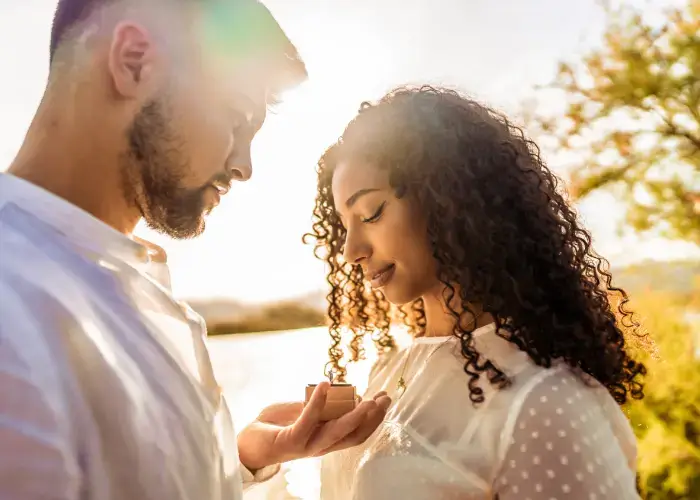
How to Choose a Bespoke Engagement Ring: A Complete Guide by David Law
Designing a bespoke engagement ring is a once-in-a-lifetime experience — but most people begin with uncertainty. You may have a few saved photos, a rough idea, or absolutely no idea at all. All of that is perfectly normal.
With over 40 years of experience designing engagement rings, I’ve created this guide to help you understand what truly matters when choosing a bespoke engagement ring, how to avoid common mistakes, and how to make informed decisions before the design process begins.
Whether you’re planning a surprise proposal or designing the ring together, this guide offers clarity, inspiration, and the essential knowledge you need.
What Makes a Bespoke Engagement Ring Truly Bespoke
“Bespoke” is one of the most misused words in jewellery. A truly bespoke engagement ring begins with a blank canvas — not a pre-made setting or a catalogue of templates, but from your story and preferences.
To achieve this, it’s essential to work with a designer who combines traditional bench-jewellery skills with innovative 3D design technology. That fusion ensures the ring is both beautifully handcrafted and precisely visualised before a single tool touches metal.
A genuine bespoke design gives you complete control over:
- Style and proportions
- Choice of diamond or gemstone
- Metal and finish
- Practicality for everyday wear
- Budget
And because the design can be previewed in 3D, every detail is refined long before it’s made in precious metal — leaving no uncertainty about the finished result.
Step 1 — Seek Inspiration (Even If You Are Unsure of What You Want Yet)
You don’t need a clear vision to begin designing a bespoke ring. Start by gathering inspiration from everyday observations and subtle clues — the jewellery your partner already wears, the colours they gravitate toward, or styles that catch their eye.
A few reference images can help refine the initial design direction without locking you into a particular look. The goal is to discover what feels right — timeless, modern, understated, or bold — before translating those ideas into a unique design.
Step 2 — Select the Diamond or Gemstone
The centre stone is crucial to the overall appearance of the ring. Many people feel overwhelmed by this choice, but it doesn’t have to be complicated.
Natural vs Lab-Grown Diamonds
Both are genuine diamonds with identical sparkle and beauty. The best choice depends on your preferences, values, and how you want the ring to feel.
The 4Cs — Keep It Simple
Cut, Colour, Clarity, and Carat all matter — but the Cut is what determines brilliance. A well-cut diamond attracts more attention than a larger but poorly cut stone.
Coloured Gemstones
If you want something meaningful or distinctive, coloured gemstones open up endless creative possibilities.
Popular options include:
- Sapphire — durable and available in every colour
- Ruby — rich, timeless, and symbolic
- Aquamarine — gentle, elegant, and romantic
- Alexandrite — rare and changes colour in different light
Gemstones add individuality and emotional value in a way diamonds can’t.
Step 3 — Choose the Ring Style and Setting
The setting defines the overall character of the ring — classic, modern, vintage, bold, or delicate. Each style has its own story:
- Solitaire: Timeless and elegant, perfect for a diamond that deserves the spotlight.
- Halo: Adds sparkle and enhances the centre stone’s appearance.
- Trilogy: Three stones representing past, present, and future.
- Modern & Minimalist: Clean lines, geometric forms, and subtle sophistication.
- Nature-Inspired: Organic details such as leaves or vines, ideal for intricate designs.
The setting should enhance the stone, not compete with it. Well-proportioned design creates balance, beauty, and durability.
Step 4 — Reflect on Lifestyle and Practicality
Beautiful design must also be wearable. When considering options, think about how the ring will fit into everyday life.
- Does your partner work with their hands or prefer low-maintenance jewellery? A lower setting might be best.
- Are they gentle or more active with jewellery? That influences the choice of metal and claw setting.
- Do they favour subtle or statement pieces? This determines width, height, and profile.
Practicality ensures your ring remains both comfortable and beautiful for years to come.
Step 5 — Get the Ring Size Right
Accurate sizing is essential for comfort and security.
If you’re planning a surprise proposal, the simplest way to estimate size is by borrowing one of your partner’s rings, placing it on your own finger, and marking where it stops. A jeweller can then measure your finger at that point to determine the correct size.
If they wear the ring on their right hand and are right-handed, remember that the corresponding finger on the left hand will usually be around one size smaller.
Printable size guides can offer a rough idea, but professional measurement is always more reliable. When in doubt, choose slightly larger — a ring can easily be reduced later, whereas enlarging it is more complex.
Step 6 — Choose the Metal That Suits Them Best
The metal you choose affects both aesthetics and longevity:
- Yellow Gold — classic, warm, and timeless
- White Gold — bright and contemporary with a rhodium finish
- Platinum — strong, hypoallergenic, and naturally white
- Rose Gold — romantic and flattering on all skin tones
The jewellery your partner already wears is the best guide. Matching metals keeps their collection cohesive and comfortable.
Step 7 — Perfect the Proportions
Proportion is one of the most overlooked aspects of engagement ring design — yet it’s the key to elegance.
A ring feels perfectly balanced when:
- The band width complements the stone size
- The height suits everyday wear
- The claws or bezel protect the stone securely
- The design flows naturally from every angle
Even subtle adjustments can transform an ordinary ring into one that looks and feels exceptional.
Step 8 — See the Ring Before It Exists (3D Design & Wax Models)
One of the greatest advantages of bespoke design is certainty.
Modern 3D design technology allows you to visualise your ring from every angle, zoom in on the smallest details, and make refinements before it’s ever crafted in metal.
Some designers also offer 3D-printed wax models you can try on — an invaluable way to confirm proportions and comfort before final approval.
This process ensures that when you say yes to your design, you already know exactly how it will look and feel.
Step 9 — Avoid These Common Mistakes
Here are some of the most frequent pitfalls to avoid when choosing or designing a ring:
❌ Following trends too closely – Styles fade; meaning lasts.
❌ Focusing only on diamond size – Cut, polish, and design affect sparkle more than carat weight.
❌ Ignoring lifestyle – A beautiful ring must also be practical.
❌ Rushing decisions – Take time to refine the design and stone selection.
❌ Choosing from catalogues – They limit creativity and often cost more than bespoke design.
Avoiding these mistakes ensures your ring feels timeless and personal.
FAQs: How To Choose A Bespoke Engagement Ring
Do I need to know exactly what I want before starting?
Not at all. A good designer will guide you through options and refine your ideas into a cohesive design.
Can I design a bespoke ring remotely?
Yes. Many designers, including myself, work successfully via video consultations.
How long does bespoke design take?
Typically 4–6 weeks, depending on complexity.
Is a bespoke ring more expensive than a ready-made one?
Not necessarily. Because you control the design and materials, bespoke often provides better value.
Can I remodel family jewellery into an engagement ring?
Absolutely. Many people choose to reuse heirloom stones or metals to add meaning and sustainability.
Why Work with a Bespoke Jewellery Designer
While many jewellers offer limited customisation or a single design concept, working with an experienced bespoke designer allows for far greater creativity and confidence.
With over four decades of experience, I take each commission through a complete design journey — presenting multiple design variations, 3D visual previews, and wax prototypes that can be tried on before final approval.
This collaborative process ensures every ring reflects the person it’s created for and feels perfect from every angle.
Final Thoughts
Choosing a bespoke engagement ring is about more than selecting a stone or a setting — it’s the process of crafting a design that captures meaning, emotion, and individuality.
If you’d like to discover how your ideas can evolve into a beautifully handcrafted, one-of-a-kind ring, I’d be delighted to guide you through the next steps.
Learn more about how I create bespoke engagement rings in London, or read my 2026 Engagement Ring Buying Guide, covering diamond prices, trends, and what to know before you start.
Or book a complimentary discovery call to begin your design journey.