The AI Revolution in Bespoke Jewellery: Why Experience Still Matters
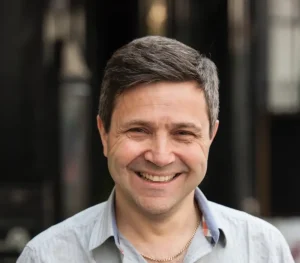
By David Law | Master Jeweller since 1984
“I don't see artificial intelligence as a challenge to the meaning of bespoke jewellery, but rather as an enhancement. I see it as another opportunity to involve clients in the creative process, helping them explore possibilities that were previously difficult to imagine or communicate. The value lies not in the technology itself, but in how it is used alongside experience, craftsmanship and personal understanding.”
AI Is Changing the Face of Jewellery Creation
The jewellery industry has changed enormously since I completed my apprenticeship in Hatton Garden in 1984. Over more than four decades, I have witnessed new technologies transform how jewellery is designed, crafted and presented to clients.
Yet throughout these changes, one thing has remained constant: the importance of understanding the person commissioning the jewellery and creating something that will stand the test of time.
Today, we are entering another fascinating period of change. Artificial intelligence is introducing new ways to explore design ideas, while advances in technology are opening up further creative possibilities.
For me, these developments are not a threat to traditional craftsmanship. They are opportunities to combine the best of modern technology with the knowledge, judgement and personal attention that only experience can provide.
AI Offers a New Way to Explore Jewellery Design
Over the past year, I have noticed something particularly interesting in the enquiries I receive. An increasing number of prospective clients are arriving with AI-generated jewellery images, detailed design briefs and occasionally remarkably technical specifications. I welcome this development.
For someone considering a bespoke piece of jewellery, AI offers another way to explore ideas, visualise a concept or find the words to describe something they have imagined. But it is important to remember that this is simply another starting point. My role is not simply to reproduce an image AI has generated, but to understand the thinking behind it and explore how it can become truly personal.
Can You Turn an AI-Generated Jewellery Design into Reality?
AI-generated jewellery designs can be remarkably convincing. A beautiful image may suggest that every detail has already been resolved, yet creating a piece of jewellery involves considerations that aren't always apparent in a photograph or AI-generated illustration.
AI can suggest how jewellery should look, but that doesn't necessarily mean the design can be constructed exactly as shown or will withstand the demands of everyday wear. The security of a gemstone setting, the proportions of an engagement ring, the wearer's lifestyle, the movement of a pendant or an earring, how a bracelet or bangle will sit on the wrist, or the construction of a pair of cufflinks can each present different challenges.
These are considerations that are easy to overlook when looking at an attractive image. Sometimes that means making subtle adjustments to an original idea. At other times, it means suggesting a different approach that achieves the same visual effect more successfully. The objective is never to compromise someone's vision, but to ensure that the finished jewellery is every bit as beautiful and practical as they imagined.
From an Image to a Three-Dimensional Creation
One of the most exciting developments in modern jewellery design is the ability to transform an image into something tangible. An AI-generated illustration can provide the starting point for a completely new piece of jewellery, but transforming that image into something tangible requires far more than reproducing what appears on the screen.
What begins as a flat image can gradually become something you can hold, examine, and eventually wear. The technology makes this possible, but experience is what allows the original idea to be interpreted successfully. Transforming that image into a physical object requires interpretation, technical understanding, and expertise to fully appreciate proportions that cannot always be determined from the original illustration. I use specialist 3D modelling and CAD software to develop these ideas into detailed three-dimensional designs, refining the shapes, dimensions, and construction before creating a physical prototype for my clients to wear and perfect before handcrafting.
Can AI Choose the Right Diamonds and Gemstones?
AI can generate remarkably detailed diamond specifications, recommending colour, clarity, proportions and carat weights. But selecting the right diamond involves far more than matching numbers on a grading report. Two diamonds with apparently identical specifications can look surprisingly different. A clarity grade doesn't necessarily guarantee that a diamond is completely eye-clean, something I always insist upon when selecting stones for my clients. The same applies to coloured gemstones, where individual variations in colour, tone and character can make all the difference.
Whether selecting a centre diamond for an engagement ring, matching stones for a pair of earrings or choosing a sapphire for a pendant, experienced judgement remains essential.AI can help identify the possibilities, but the final selection should be based on the individual beauty of the stones and how they complement the jewellery being created.
Can AI Recommend the Right Precious Metal for Your Jewellery?
When it comes to choosing precious metals, AI can provide information about gold, platinum and their different characteristics. But can it determine which metal is most suitable for a particular design, the gemstones being used and the lifestyle of the person who will wear it?
The answer isn't always straightforward. Platinum, for example, is often an excellent choice for an engagement ring because of its strength, suitability for gemstone settings and long-term wear characteristics. Depending on current precious metal prices and the design itself, it may also offer a financial advantage over certain gold alloys.
However, if someone is commissioning a diamond pendant with a chain, the considerations may be quite different. The weight, flexibility, construction and cost of the chain can all influence which precious metal is the most appropriate choice. The same applies to earrings, bracelets, and other pieces where comfort, weight and how the jewellery is worn must be considered alongside appearance.AI can explain the characteristics of different precious metals, but choosing the right one requires understanding how the finished jewellery will be made, worn and enjoyed over time.
In Conclusion: AI and Your Personal Jeweller
AI will undoubtedly continue to shape how people discover, imagine and commission jewellery. Other technologies will follow. Whatever changes lie ahead, I believe the value of traditional craftsmanship, personal judgement and the relationship between a jeweller and their client will remain just as important.
Artificial intelligence can help us explore extraordinary possibilities, but it cannot take responsibility for the finished piece or fully appreciate the personal significance behind a commission. After more than forty years, I still find that the most important part of creating a bespoke piece of jewellery is not the technology we use. It is understanding the person we are creating it for.
David Law - Your Personal Jeweller, Marylebone, London
David Law is a Hatton Garden-trained master jeweller and the founder of Your Personal Jeweller. Since 1984, he has combined traditional craftsmanship with modern design technology, creating individually commissioned jewellery through personal consultations in London, across the Home Counties and remotely for clients worldwide.